|
| |
 |
| |
By Appointment Only
We do not see patients
without scheduled appointment.
|
Tel:
Office Hours:
M-F
10:00am - 4:30pm Pacific Time |
|
|
|
|
|
 |
 |
| m o d e l |
|
Nasal And Septal Surgery |
| |
Why this form of surgery is performed:
Nasal and Septal surgery is performed to correct severe breathing
difficulties and alleviate severe congestion by opening up
the airways on either side of the nasal passageways. |
|
| |
|
|
|
|
|
|
|
Nasal Surgery
Special (this Month) |
|
Special (this Month) |
|
|
|
|
|
| |
| |
In the Silverlake Virgil Surgical Center we accept the following payment: |
|
|
| |
Are patients outside of the Los Angeles area able to have a consultation and surgery on the
next day? We can help you with Travel Arrangement . (For more info click here)
Many of out of town patients have their initial physical exam and consultation immediately
prior to scheduled surgery. During this consultation, the doctors will discuss the surgery in
full detail.
|
|
|
|
|
Are the costs of covered by Insurance?
|
Our center accepts most PPO insurance plans. You may submit information regarding your insurance carrier in the Patient/Inquiry department. Insurance coordinator will verify your insurance information and determine if your insurance covers the procedure. Insurance will be considered for this surgery if proper documentation is provided to substantiate medical necessity.
You may also contact us at:
Tel.
and provide us your insurance information over the phone for verification. |
What insurance companies do you accept? |
|
Tel.
|
|
|
|
|
| |
WHEN SUCH A PROCEDURE IS DEEMED NECESSARY: |
|
|
| |
Sometimes this may be the only option remaining when all other treatments like allergy shots etc. have failed to alleviate the symptoms. Even a slight physical deformity in the nasal area can result in problems that can severely impede a person's quality of life. The "septum" which is the two openings to the nostrils that are separated by just a thin wall of cartilage is especially prone and susceptible to injury. In some cases, a patient may just have a septum that does not develop properly. In these cases, the septum may become 'bent' or 'deviated', which can in turn cause difficulties in the sinuses or turbinates, which are other susceptible nasal areas. If the bone and cartilage in the nose becomes misaligned, this can cause increased air flow on one side and partial reduction in air flow on the other side, causing a definite imbalance. This imbalance in the flow or air will irritate the mucous membranes that line the insides of the nose and the 'turbinates', which are curved bones in the nasal passage that help to keep the nose lubricated and clean. This irritation can cause swelling and blockage on both sides of the nose. This swelling in turn can block access to the sinus cavities and prevent proper drainage.
Some of the problems that can arise due to improper drainage of the sinuses and require Nose Surgery may include:
 |
Difficulty breathing |
|
Discharge from the nose, which may include bleeding |
|
Post nasal drip |
|
Dryness of mouth |
|
Shortness of breath |
|
Snoring |
|
Headaches |
|
1. The doctor may recommend one of the following procedures,
or a combination of them, to help correct the problem, but
this recommendation will vary based upon the individual symptoms
being experienced by each patient: Septoplasty - This involves
the surgical realignment of the septum in order to straighten
it.
2. Osteotomy - This involves the fracturing and resetting
of the nasal bones.
3. Partial Turbinectomy - This involves the reduction of the
swollen turbinates.
4. Rhinoplasty - This involves the reshaping and restructuring
of the nose for cosmetic and/or functional reasons.
These procedures are typically performed as outpatient procedures
but may require a brief stay in the hospital. Anesthesia will
range from just heavy sedation to general anesthetic. In either
case, the patient will need someone to collect them from the
hospital and take them home safely. Very little swelling and
bruising should be evident if only the septum was straightened.
However, in the case of refracturing, the swelling and bruising
may take several weeks to subside.
The healing process may take several weeks and during this
time, the utmost caution must be taken to avoid any blow or
trauma from occurring to the nose. Some of the symptoms that
were present before surgery may continue for variable amounts
of time after the procedure, so it is wise not to expect instant
results. Some relief can be obtained by using a saline spray
several times a day, or through administering other medications.
The symptoms may in fact remain, until the healing is complete,
which may be a period of several months.
Nasal surgery cannot be expected to cure all symptoms, especially
if the patient is also susceptible to allergies, but it can
definitely help correct some major breathing and sinus problems.
The most common symptoms that sinus-sufferers describe are headaches,
facial pain, the loss of the sense of smell, post nasal drip, nasal congestion and the
inability to breathe through the nose.
The causes for these symptoms are quite simply explained.
The sinuses are chambers containing air and are located on
the face, directly under, between and above the eyes. These
chambers are lined with mucous membrane whose function it
is to produce up to two pints of mucous a day. Each sinus
has it's own opening into the nose and there are a sum total
of four pairs of sinuses starting from the pair above the
eyes, and proceeding downwards: Frontal, Ethmoid, Maxillary
and Sphenoid Sinuses.
The mucous is then swept into the ostium or the opening and
enters the nose and cleared through the throat. Allergens,
viruses, bacteria and other air contaminants cause an inflammation,
followed by the swelling of the linings of the sinuses. The
swelling causes the opening to become blocked and prevents
the drainage of the mucous, causing infection and thickening.
This infection causes more swelling and more obstruction.
So when these openings become obstructed, the patient may
experience difficulty breathing, facial pain around the sinuses,
behind and below the eyes and other chronic sinus infections.
Although allergies, colds and septal deviations are all potential
causes of sinus obstruction, the results are the same, with
retained secretions of mucous becoming infected and thus resulting
in 'sinusitis'. |
|
|
|
|
| |
This may include some or all of the following symptoms listed: |
|
| |
|
Difficulty breathing |
|
Discharge from the nose |
|
Dryness of the mouth |
|
Shortness of breath |
|
Headaches |
|
Snoring |
|
|
| |
|
|
| |
Indications:
|
|
| |
|
Large, wide, and/or drooping nose. |
|
Damaged or crooked nose due to injury. |
|
Breathing problems as a result of trauma, accident, or birth defects. |
| |
| Will Insurance cover my surgery? |
If your requests are of a functional nature
(for example, you cannot breathe through your
nose), many insurance companies will cover the
part of the surgery that is required to correct
these problems.
However, any requests that relate simply to
change of appearance are generally not covered
by insurance companies, and do require a
cosmetic surgery fee. |
|
| |
|
|
|
|
|
| |
|
| |
| |
| REVISION RHINOPLASTY |
| Following are some common questions asked by those considering REVISION RHINOPLASTY |
| |
| Question: I think my first surgeon took too much from my nose. Can you fix this? |
| Answer:
This is a common reason for revision rhinoplasty. No matter where in
your nose too much has been removed, Doctor's experience is that
improvement is often possible. |
| |
| Question: I want my nose to look natural again. Can you do this? |
| Answer:
This is the most common request our patients have, and is perhaps the
most important objective in revision rhinoplasty. Doctor is experienced
at repairing the "over-operated" nose. While each case is different, in
Doctor's experience it is usually possible to make significant
improvement. |
| |
| Question: My nose is too small. Can you make it bigger? |
| Answer:
Yes, if a patient's nose has been over-operated and now looks too
small, Doctor can generally improve it. He also can generally fix noses
that are too short, too long, too narrow, too wide, twisted, and so
forth. |
| |
| Question: Is there a lot of pain or nausea? |
| Answer:
Not typically. Time after time, Doctor's patients are surprised at how
little pain and how little nausea there is. After-surgery pain is
usually well-controlled with a mild narcotic. We are especially proud
of our anesthesia team, who provide expert anesthesia that keeps
after-surgery nausea to a minimum. |
| |
| Question: What is the recovery period? |
| Answer: |
| |
|
Patients may experience some degree
of bruising and swelling to
progressively resolve over two to four
weeks |
| |
|
A splint will be placed on the
outside of the nose and possibly on the
inside as well. Both types of splints
are used to protect the, now delicate,
nasal structures. |
| |
|
Bed rest the day of surgery is
recommended. |
| |
|
Limit activity for the next two days
following surgery. |
| |
|
Avoid strenuous activities for about
four to six weeks. |
| |
|
Return to work in about one to two
weeks. |
|
| |
| Question:
Will insurance cover my surgery? |
Answer:
If your requests are of a functional nature (for
example, you cannot breathe through your nose),
many insurance companies will cover the part of
the surgery that is required to correct these
problems.
However, any requests that relate simply to
change of appearance are generally not covered
by insurance companies, and do require a
cosmetic surgery fee. |
| |
| Question: I live far away, how do I arrange to see you and to have surgery? |
| Answer:
You can contact Doctor's office and arrange an appointment. Many
patients come for an initial visit and schedule surgery at the end of
this initial visit. They then return for their surgery. Occasionally a
patient may wish to come into town for consultation followed by surgery
the next day. This is possible but obviously must be arranged in
advance. |
| |
| Question: The tip of my nose looks pointy, twisted and abnormal. Can you fix my nasal tip? |
| Answer: Yes, it has been Doctor's experience that significant improvements are possible in this relatively common problem. |
| |
| Question: Do you do Computer Imaging? |
| Answer:
Yes. Computer imaging is a very helpful way to communicate surgical
goals. It is important for the surgeon to know what the patient wants
to accomplish, and the patient must know what the surgeon envisions as
a goal for the surgical result. Computer imaging is extremely useful to
communicate this information, and we therefore perform computer imaging
on virtually all patients prior to surgery. |
| |
| Question: I'm not sure what I need to have done, I just know I don't like it! |
| Answer:
We understand! Some patients know how they want their nose to look, but
other revision rhinoplasty patients are frustrated, angry, and even a
little scared. They know they don't like their nose, but they are upset
and confused and just want someone to help them! We understand this and
will take the time to work with you to help you have a happy outcome. |
| |
| Question: I am scared! |
| Answer:
We understand! You have had a bad experience, so it is okay to feel
that way. It is important for you to be confident in the surgeon you
choose to perform your revision rhinoplasty. Doctor is proud of his
surgical results, but he also wants his patients to feel at ease.
Doctor's staff plays an important role in helping his revision
rhinoplasty patients feel more at ease before and after surgery. |
| |
| Question: How do I know if I am a candidate for revision rhinoplasty? |
| Answer:
If you have had a rhinoplasty and do not like the way your nose looks,
and if you are in good health, then you are eligible for a revision
rhinoplasty consultation. The next step is to meet with a skilled
surgeon to see if surgery can meet your expectations. In Doctor's
practice, Doctor talks to you in detail and examines you. Then, he
explains his realistic expectations for your surgery and will let you
know if he thinks you are a good candidate. |
| |
| Question: Is this outpatient surgery? |
| Answer: YES |
| |
| Question: Ever
since my rhinoplasty, I can't breathe well through my nose. Can you fix
this? |
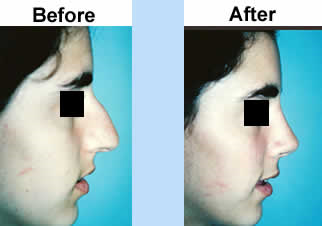
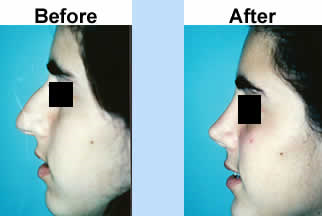
| Answer: Yes.
Unfortunately, this is a common complaint. Fortunately we are usually
able to substantially improve nasal breathing. A number of the patients
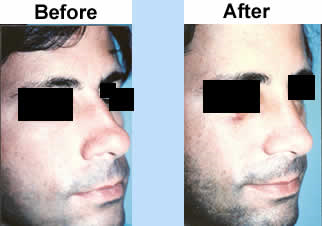
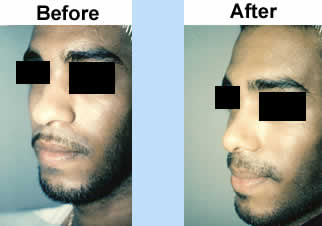
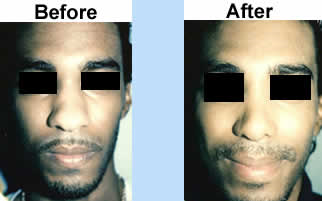
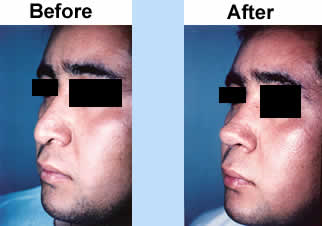
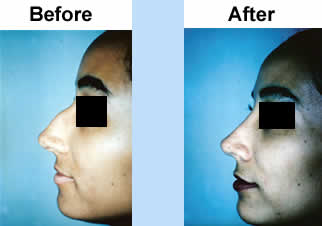
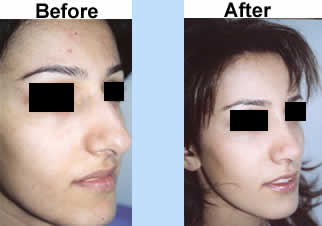
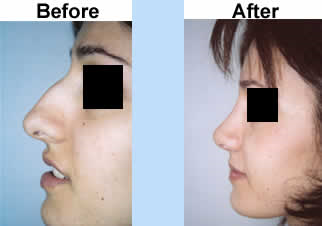
in the Photo Album had this problem. Many times, patients request
improvement in breathing and appearance |
|
|
|
  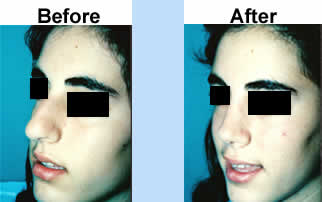
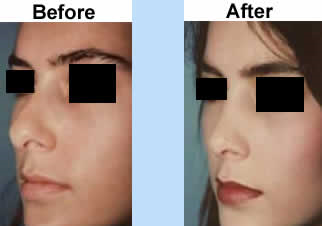 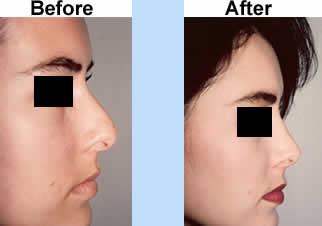
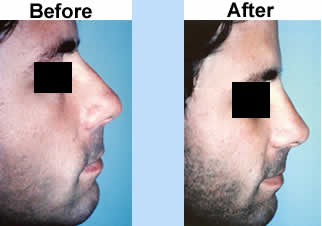 
|
|