|
| |
 |
| |
By Appointment Only
We do not see patients
without scheduled appointment.
|
Tel:
Office Hours:
M-F
10:00am - 4:30pm Pacific Time |
|
|
|
|
|
 |
 |
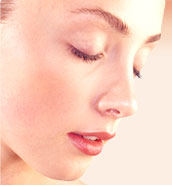
| m o d e l |
|
|
| |
Rhinoplasty,
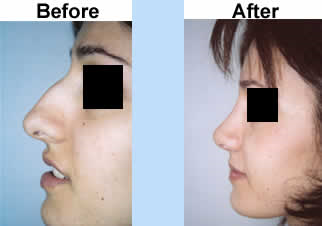
popularly known as "the nose job," Rhinoplasty, or surgery to reshape
the nose, is one of the most common of all plastic surgery procedures
You would be surprised how much a little thinning or up-turning of the
nose can soften or balance a face.
The introduction of advanced Rhinoplasty techniques has made it possible to achieve beautifully- pleasing outcomes. |
|
| |
|
|
|
Procedure
Nasal
Cosmetic Surgery |
|
|
|
|
Nasal Surgery
Special (this Month) |
|
Special (this Month) |
|
|
|
|
|
| |
| |
In the Silverlake Virgil Surgical Center we accept the following payment: |
|
|
| |
Are patients outside of the Los Angeles area able to have a consultation and surgery on the
next day? We can help you with Travel Arrangement . (For more info click here)
Many of out of town patients have their initial physical exam and consultation immediately
prior to scheduled surgery. During this consultation, the doctors will discuss the surgery in
full detail.
|
|
| |
|
|
| |
What are the different types of nasal surgery? |
|
|
|
|
| |
Nasal surgery includes any surgery performed on the outside
or inside of the nose. A common type of reconstructive and
cosmetic surgery, nasal surgery may be performed to accomplish
the following: |
|
| |
 |
improve breathing |
|
correct congenital or acquired deformities |
|
change size or shape of nose (cosmetic) |
|
repair nasal injuries |
|
|
| |
|
|
| |
Septoplasty
Septoplasty is the
surgical correction of defects and deformities of the nasal
septum (the partition between the nostrils). Examples of
septoplasty include the following:
|
|
| |
|
correction of a deviated septum |
| |
A
deviated septum is a condition in which the partition
(septum) between the nostrils is not in a straight vertical
alignment. A deviated septum can cause obstructed airflow. A
deviated septum can be caused by a birth defect or injury. |
|
correction of cleft defects that affect the nose
and nasal cavity |
| |
| Will Insurance cover my surgery? |
If your requests are of a functional nature
(for example, you cannot breathe through your
nose), many insurance companies will cover the
part of the surgery that is required to correct
these problems.
However, any requests that relate simply to
change of appearance are generally not covered
by insurance companies, and do require a
cosmetic surgery fee. |
|
| |
|
|
|
|
|
| |
An open or a closed technique is performed to make the nose
smaller, reduce a hump on the nose, change the shape of the
tip and sides of the nose, as well as other changes.
An incision will be made to gain access to the framework of
the nose. This incision is usually placed within the nostrils.
Cartilage is then sculpted away to reduce the size or shape.
If the opposite result is desired, tissue may be added to
increase the size of the nose. The septum may be trimmed to
correct droopiness or may be realigned to correct breathing
problems.
Most
nasal
surgery patients have a definite idea as to how they would
like to improve or refine the shape of their nose. Usually
they don’t like the “nasal
hump” on the bridge,
the
thickness of the nasal tip, or the
width
of their nose. The
nasal
septum, (the structure that separates the two nostrils
inside the nose), is composed of cartilage and bone. It may
become
deviated
or twisted, either through the trauma of birth, or as the
result of an accidental injury. This deviation may alter the
pattern of air flow through the nose, making it more
difficult
to breathe. In addition, the nose may appear crooked with
a “hump”.
Often, a surgical procedure used to correct
breathing through the nose also improves its appearance.
Reduction of the “nasal
hump”,
refinement
of the nasal tip, narrowing of the width, and
straightening of the nose are combined into one procedure. In
order to eliminate visible scarring, the nasal surgery is done
entirely from within the nostrils. The goal is to achieve a
more natural appearance, without a “turned up” or artificial
look.
|
|
|
| |
How does our doctors figuring out what is wrong and then how to fix it? |
|
|
| |
There is both a science and an art to
revision
rhinoplasty. There are certain approaches, techniques, and
so forth that are important. Then, just like artists, and
athletes, and virtually all professions in life, some surgeons
are simply better at revision rhinoplasty than others.
Our doctors ENT and board certified experienced
surgeons understand the underlying causes of the various
problems occurring in revision surgery. Understanding the
anatomic cause of each complication provides a guide to the
correct approach to repair. Often there is more than one
concern and these can relate to each other in a complex
fashion.
Sometimes if a problem is focused and limited, a targeted,
limited approach can fix the problem. Other times, a more
comprehensive reconstruction is needed.
The two approaches are the endonasal or "closed"
Rhinoplasty (all incisions hidden inside the nose) and the
external or "open" Rhinoplasty (all incisions EXCEPT one small
incision are inside the nose. In open rhinoplasty there is one
small incision across the columella (the skin between the
nostrils).
In Silverlake Virgil Surgical Center, Inc our Board
Certified ENT
performs both endonasal (closed) and external (open)
Rhinoplasty. In his experience, the closed approach is more
suitable for some noses, while the open technique is more
suitable for others.
Since every nose is different and has unique surgical
requirements doctor r discusses the options with each patient
and is happy to describe his surgical plan in detail.
Fortunately, there are no major disadvantages to either
approach. However, each approach has special advantages for
specific situations. Since every nose is different and has
unique surgical requirements our doctors will
discuss the options with each patient |
| |
|
|
|
|
| |
|
To create a more attractive and better proportioned nose
by changing the size or slope of the nose, shape of the tip,
or span between the nostrils. |
|
To improve breathing
capability and restore proper function. |
|
To improve
overall self image. |
| |
|
|
| Length of Procedure: |
|
Rhinoplasty can take from one to two hours depending on
the complexity of the procedure. |
|
This surgery is done
on an outpatient basis with general or local anesthesia. You
will be able to rest following your surgery in the comfort of
your own home. |
|
To improve
overall self image. |
| |
|
|
| Recovery & Aftercare: |
|
Patients may experience some degree of bruising and
1 swelling to progressively resolve over two to four
weeks |
|
A splint will be placed on the outside of the
nose and possibly on the inside as well. Both types of splints
are used to protect the, now delicate, nasal structures. |
|
Bed rest the day of surgery is recommended. |
|
Limit activity for the next two days following
surgery. |
|
Avoid strenuous activities for about four to
six weeks. |
|
Return to work in about one to two weeks. |
| |
|
|
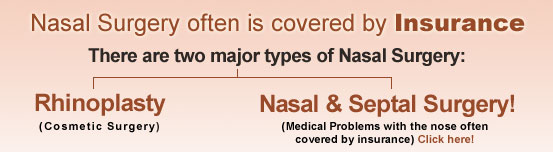
Will insurance cover my surgery?
If your requests are of a functional nature (for example,
you cannot breathe through your nose), many insurance
companies will cover the part of the surgery that is required
to correct these problems.
However, any requests that relate simply to change of
appearance are generally not covered by insurance companies,
and do require a cosmetic surgery fee.
|
|
| |
| |
|
| TYPES OF
ANESTHESIA |
|
| n our Surgical Center compare to
number of other surgical center we prefer General Anesthesia,
in which case you'll sleep through the entire
operation |
|
|
|
|
|
| * The Information Presented On This Website Is Intended To Be Used For Informational Use Only; It Is Not Intended To Be A Substitute For Professional Advice. If You Are Planning On Having A Procedure Performed Or If There Is Anything You Don't Understand Or Have Questions About Your Procedure, Time, Price Variation Due Patient Comorbidity, Blood Work, Additional Cost for General Anesthesia, Post Surgery Recovery, Combination Of The Different Procedures. Please Consult Our Physician Who Will Be Happy During Your Free Consultation To Go Over In Details With All Your Questions.
|
|
|
|
|
| |
|
| |
| |
| REVISION RHINOPLASTY |
| Following are some common questions asked by those considering REVISION RHINOPLASTY |
| |
| Question: I think my first surgeon took too much from my nose. Can you fix this? |
| Answer:
This is a common reason for revision rhinoplasty. No matter where in
your nose too much has been removed, Doctor's experience is that
improvement is often possible. |
| |
| Question: I want my nose to look natural again. Can you do this? |
| Answer:
This is the most common request our patients have, and is perhaps the
most important objective in revision rhinoplasty. Doctor is experienced
at repairing the "over-operated" nose. While each case is different, in
Doctor's experience it is usually possible to make significant
improvement. |
| |
| Question: My nose is too small. Can you make it bigger? |
| Answer:
Yes, if a patient's nose has been over-operated and now looks too
small, Doctor can generally improve it. He also can generally fix noses
that are too short, too long, too narrow, too wide, twisted, and so
forth. |
| |
| Question: Is there a lot of pain or nausea? |
| Answer:
Not typically. Time after time, Doctor's patients are surprised at how
little pain and how little nausea there is. After-surgery pain is
usually well-controlled with a mild narcotic. We are especially proud
of our anesthesia team, who provide expert anesthesia that keeps
after-surgery nausea to a minimum. |
| |
| Question: What is the recovery period? |
| Answer: |
| |
|
Patients may experience some degree
of bruising and swelling to
progressively resolve over two to four
weeks |
| |
|
A splint will be placed on the
outside of the nose and possibly on the
inside as well. Both types of splints
are used to protect the, now delicate,
nasal structures. |
| |
|
Bed rest the day of surgery is
recommended. |
| |
|
Limit activity for the next two days
following surgery. |
| |
|
Avoid strenuous activities for about
four to six weeks. |
| |
|
Return to work in about one to two
weeks. |
|
| |
| Question:
Will insurance cover my surgery? |
Answer:
If your requests are of a functional nature (for
example, you cannot breathe through your nose),
many insurance companies will cover the part of
the surgery that is required to correct these
problems.
However, any requests that relate simply to
change of appearance are generally not covered
by insurance companies, and do require a
cosmetic surgery fee. |
| |
| Question: I live far away, how do I arrange to see you and to have surgery? |
| Answer:
You can contact Doctor's office and arrange an appointment. Many
patients come for an initial visit and schedule surgery at the end of
this initial visit. They then return for their surgery. Occasionally a
patient may wish to come into town for consultation followed by surgery
the next day. This is possible but obviously must be arranged in
advance. |
| |
| Question: The tip of my nose looks pointy, twisted and abnormal. Can you fix my nasal tip? |
| Answer: Yes, it has been Doctor's experience that significant improvements are possible in this relatively common problem. |
| |
| Question: Do you do Computer Imaging? |
| Answer:
Yes. Computer imaging is a very helpful way to communicate surgical
goals. It is important for the surgeon to know what the patient wants
to accomplish, and the patient must know what the surgeon envisions as
a goal for the surgical result. Computer imaging is extremely useful to
communicate this information, and we therefore perform computer imaging
on virtually all patients prior to surgery. |
| |
| Question: I'm not sure what I need to have done, I just know I don't like it! |
| Answer:
We understand! Some patients know how they want their nose to look, but
other revision rhinoplasty patients are frustrated, angry, and even a
little scared. They know they don't like their nose, but they are upset
and confused and just want someone to help them! We understand this and
will take the time to work with you to help you have a happy outcome. |
| |
| Question: I am scared! |
| Answer:
We understand! You have had a bad experience, so it is okay to feel
that way. It is important for you to be confident in the surgeon you
choose to perform your revision rhinoplasty. Doctor is proud of his
surgical results, but he also wants his patients to feel at ease.
Doctor's staff plays an important role in helping his revision
rhinoplasty patients feel more at ease before and after surgery. |
| |
| Question: How do I know if I am a candidate for revision rhinoplasty? |
| Answer:
If you have had a rhinoplasty and do not like the way your nose looks,
and if you are in good health, then you are eligible for a revision
rhinoplasty consultation. The next step is to meet with a skilled
surgeon to see if surgery can meet your expectations. In Doctor's
practice, Doctor talks to you in detail and examines you. Then, he
explains his realistic expectations for your surgery and will let you
know if he thinks you are a good candidate. |
| |
| Question: Is this outpatient surgery? |
| Answer: YES |
| |
| Question: Ever
since my rhinoplasty, I can't breathe well through my nose. Can you fix
this? |
| Answer: Yes.
Unfortunately, this is a common complaint. Fortunately we are usually
able to substantially improve nasal breathing. A number of the patients
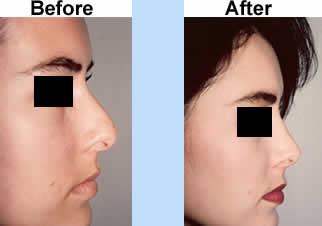
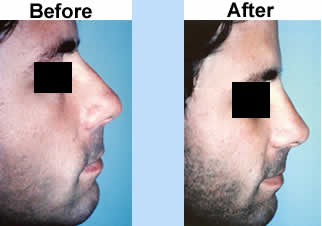
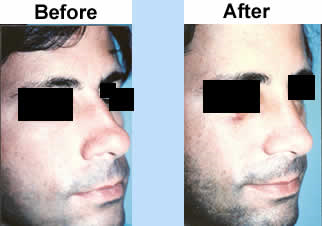
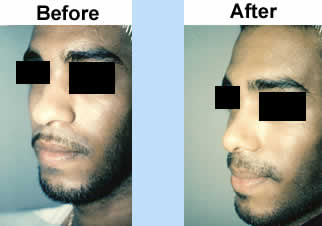
in the Photo Album had this problem. Many times, patients request
improvement in breathing and appearance |
|
|
|
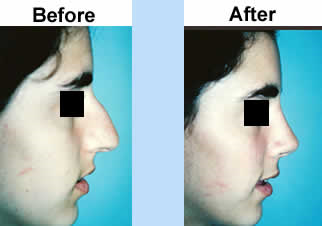 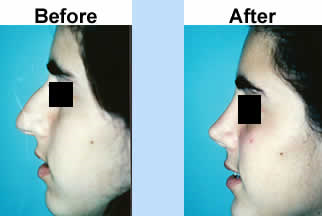 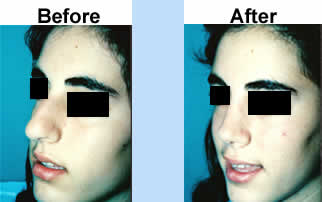
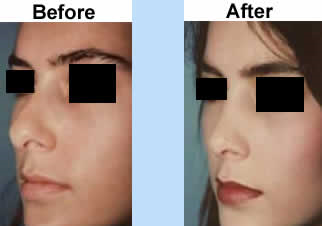 
 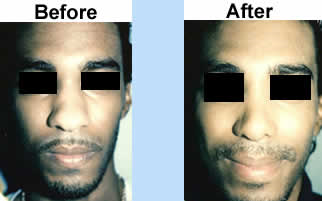
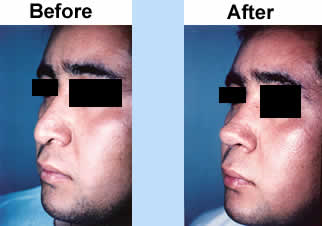
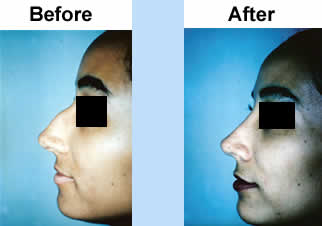
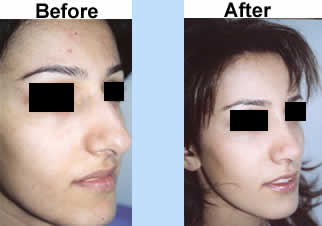 
|
|